
As Coralive approaches its 10-year anniversary, it offers a moment to reflect: not only on how far the organisation has come, but also on how coral restoration itself is evolving. What began as small project has grown into a global network of restoration sites, partnerships, and ongoing learning.
We spoke with Coralive’s new co-directors, Matt and Zoe, about their personal journeys into reef conservation, what drives their work today, and how they see the future of restoration unfolding.
From Early Motivation to Global Reef Work
Both Matt and Zoe came into coral restoration through a shared combination of curiosity and a strong connection to the ocean.
For Matt, that motivation started early. Growing up in Scotland, he recalls being inspired by nature documentaries, but also feeling a strong sense of responsibility. His path led through various conservation roles before joining Coralive in 2021, initially as a project assistant and gradually moving into a leadership role.
Zoe’s background is rooted in coastal Australia, where time spent in and around the ocean shaped her interest in marine systems. It was only after moving to the Maldives, working on clown fish breeding and sea turtle rehab, that coral reefs became central to her work. Arriving shortly after the 2016 global bleaching event, she saw firsthand both the importance of reefs and the scale of their decline. In 2018 she then joined Coralive as basically an intern, helping to set up a coral nursery and reef restoration in the Maldives, then working at other project locations as project manager to now co-directing
These different paths led both of them to have vast experience in field-based work, adaptability, and learning by doing: principles that characterise Coralive’s approach from the beginning up until now and into the future.
What Drives Coralive’s Work Today
Coralive started small, with just a few structures with around 100 corals on it in. Now, 10 years later, one of the unique characteristics of Coralive is, that it is a globally based NGO with projects not only in one region or one ocean, but basically anywhere where you can find corals, “whether that’s in the Caribbean, near the start of Coralive’s work, whether it’s in the Red Sea, whether it’s in the Western Indian Ocean and the Seychelles or the Indian Ocean and the Maldives, whether it’s in the Coral Triangle or in the Pacific, we’ve been everywhere”.
Working across multiple regions and reef systems brings constant and new challenges. Yet this also forms the strength of Coralive projects; being very adaptable and having an ever-growing knowledge pool full of different restoration techniques, both active and passive, that can be fitted, merged, and adjusted individually, based on each location, reef system and the available resources and personnel.
Over the past decade, the organisation has expanded from small pilot setups to projects operating at significantly larger scales, supported by growing networks, partnerships, and technical experience. Alongside this growth and running projects, this year will focus on refining how projects are implemented, learning from past successes and challenges, and applying those lessons more systematically.
One of the most rewarding aspects is seeing all the long-term work come together: “You start to see systems become self-running, data coming together, and multiple efforts actually changing the landscape, or ‘coralscape’”, as Matt says.
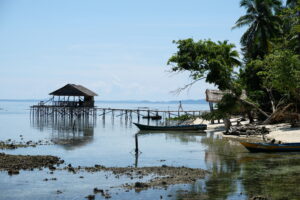

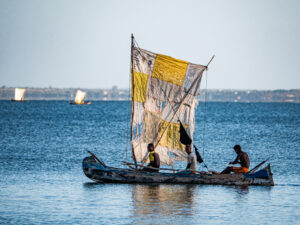
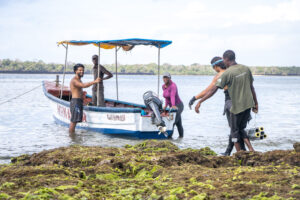
From the Maldives to Indonesia, Saudi Arabia, and Madagascar, Coralive’s projects span multiple ocean basins, reflecting a globally connected approach to coral reef restoration. (Pictures in part by Daniel Bichsel)
Opportunities and Challenges in Coral Restoration
Coral restoration is receiving ever increasing global attention, accompanied by both optimism and skepticism. For Coralive, the future of the field lies in balancing innovation with realism.
There is clear potential in emerging approaches such as larval propagation and assisted fertilisation, which aim to increase restoration efficiency at larger scales. At the same time, these methods are not a replacement for existing practices, but rather an addition to a broader set of tools.
A recurring theme is that restoration cannot rely on a single solution. As Matt puts it: “There is no silver bullet to coral restoration.” Each reef system presents its own conditions and challenges, requiring site-specific approaches, continuous observation, and a willingness to adapt methods over time.
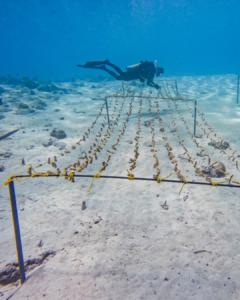
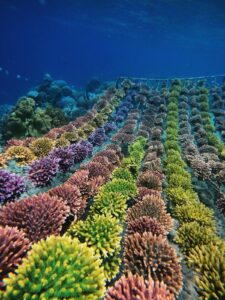

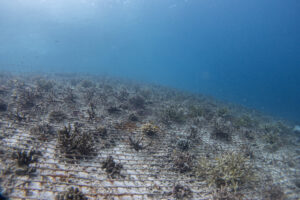
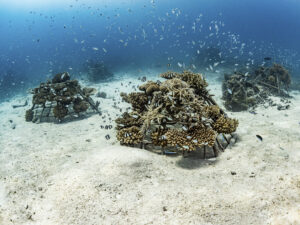
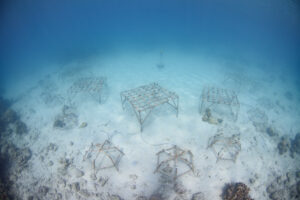
Rope nurseries, table nurseries, metal pods, substrate stabilisation, microfragmentation and sexual reproduction – we have tried and tested an array of methods throughout our projects over the years. (Pictures in part by Daniel Bichsel and Steve Lindfield)
In this context, maintaining strong fundamentals remains essential. While new technologies and research directions are important, much of the impact still comes from consistent, well-executed fieldwork – building nurseries, outplanting corals, and monitoring results over time.
At the same time, the field faces structural challenges. One of the most significant is how restoration is funded. There is often strong support for novel, high-tech solutions, while ongoing, operational work, which is essential for maintaining and scaling restoration efforts, receives less attention. This creates a gap between innovation and implementation.
Another challenge is competition within the field itself. With many organisations working independently, there is a need for stronger collaboration, shared learning, and alignment of efforts. As Matt notes, “there’s no time to be heroes – we have to work together.”
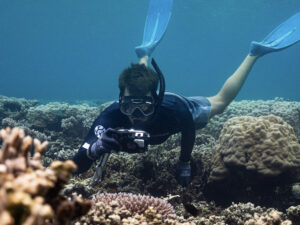
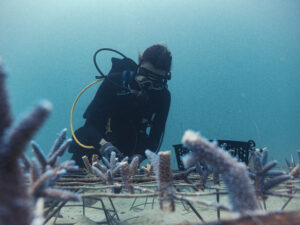
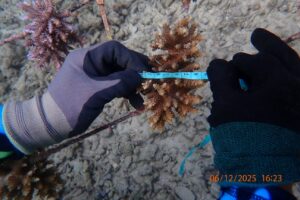
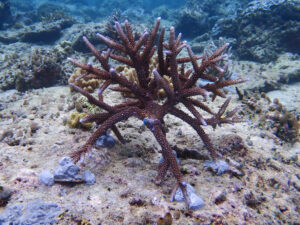
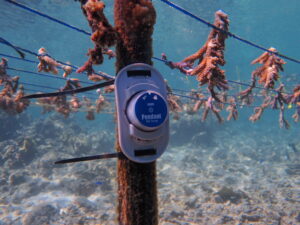
Continuous monitoring of reef conditions – including benthic composition, fish and invertebrate populations, natural recruitment levels, predation, environmental parameters, coral survival, growth, and outplanting success – directly informs restoration strategies and contributes to the growing body of knowledge in coral reef restoration.
Communities, Collaboration, and Long-Term Impact
Across all Coralive projects, one factor consistently determines success – the involvement of local communities and partners. “I love seeing as people’s understanding and knowledge increase so does their passion to protect and restore these environments and pass on this knowledge to others.” says Zoe.
These partnerships are not an additional component of restoration, they are central to it. As Matt emphasises, “If they’re not there, then we are nothing… these communities are the backbone of our projects.” Local stakeholders provide knowledge, continuity, and long-term stewardship of project sites. Coralive’s role is therefore not only to implement restoration activities, but also to support knowledge transfer and capacity building. “We always try to merge the physical work with educational components. Whether this is informal explanations as we go or holding workshops, talks, and practical demonstrations”, adds Zoe.
The long-term goal is for projects to become increasingly independent, with local teams able to manage and expand restoration efforts themselves. This shift towards community-led approaches is seen as essential for both ecological and social impact. This combination of global experience and local implementation forms the basis of Coralive’s approach.
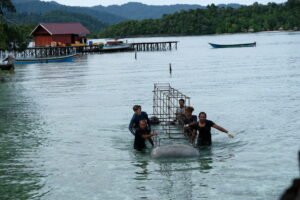
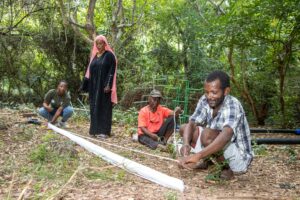
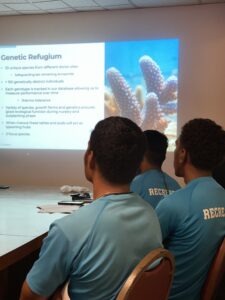
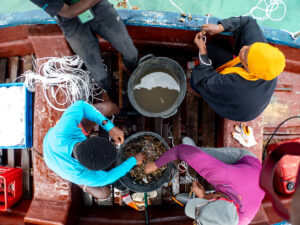
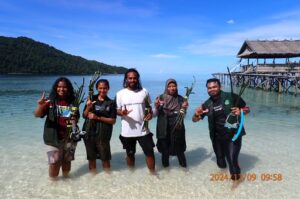
Each project is built on close collaboration with local partners and communities, combining scientific knowledge with site-specific experience. This two-way exchange strengthens restoration efforts, supports local capacity, and ensures that knowledge remains within the communities working to protect their reefs.
Looking ahead, while still operating globally, a goal of Coralive is towards establishing self-sustaining, long-term project hubs. Rather than spreading resources across many short-term interventions, the aim is to build a number of stable, well-supported sites that can expand over time. These hubs provide continuity, strengthen partnerships, and create a foundation for both restoration, research, and training.
In addition, while Coralive has always been strongly practitioner-driven, there is now increasing integration of applied science into fieldwork, supporting scientists but also conducting their own studies. This includes testing approaches directly in the field, generating data that can inform decision-making, and focusing on research that is immediately applicable to improving restoration outcomes.
Despite these shifts, Matt says, “our vision is the same: to continue to restore coral reefs around the world in areas where natural recovery is no longer sufficient. It was our vision from day one and it’s our vision going forward into the next decade.”
In the end, coral reef restoration remains a long-term challenge, with no guaranteed outcomes. Progress is often incremental, and setbacks are inevitable. Yet, the work continues, driven by a combination of experience, collaboration, and a commitment to act where it is still possible to make a difference. As Matt reflects: “Whether or not it succeeds in the long term, we’ll be glad that we tried.”
For Coralive, that perspective remains central – to continue learning, improving, and contributing, one reef, one project, and one partnership at a time.
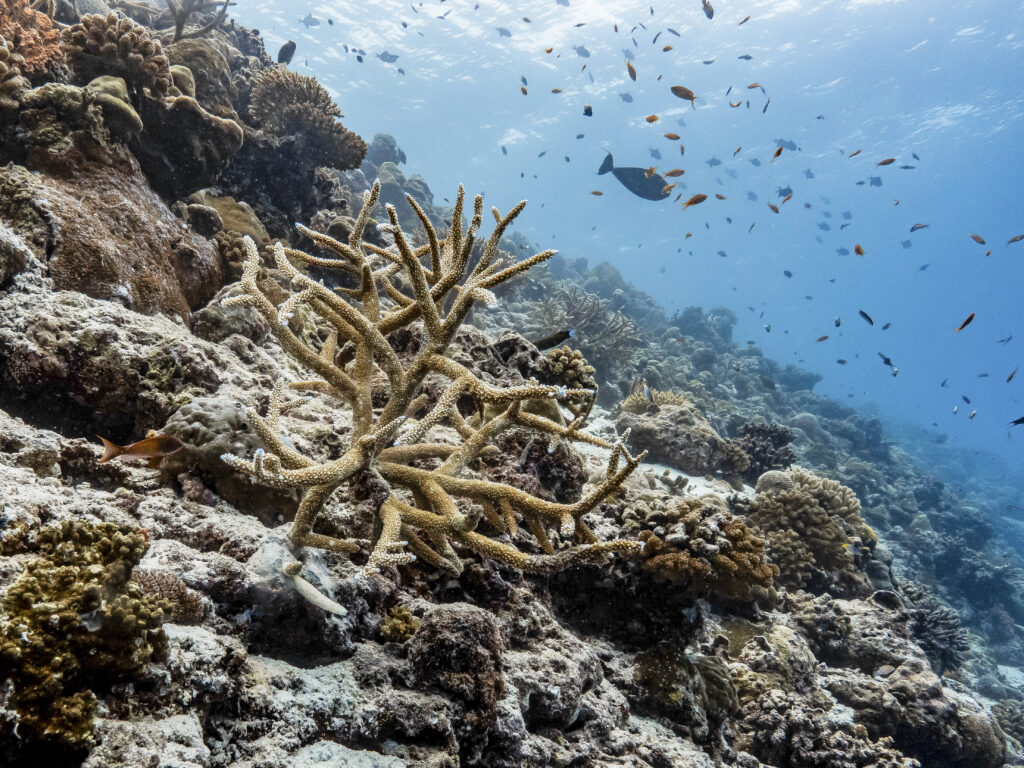
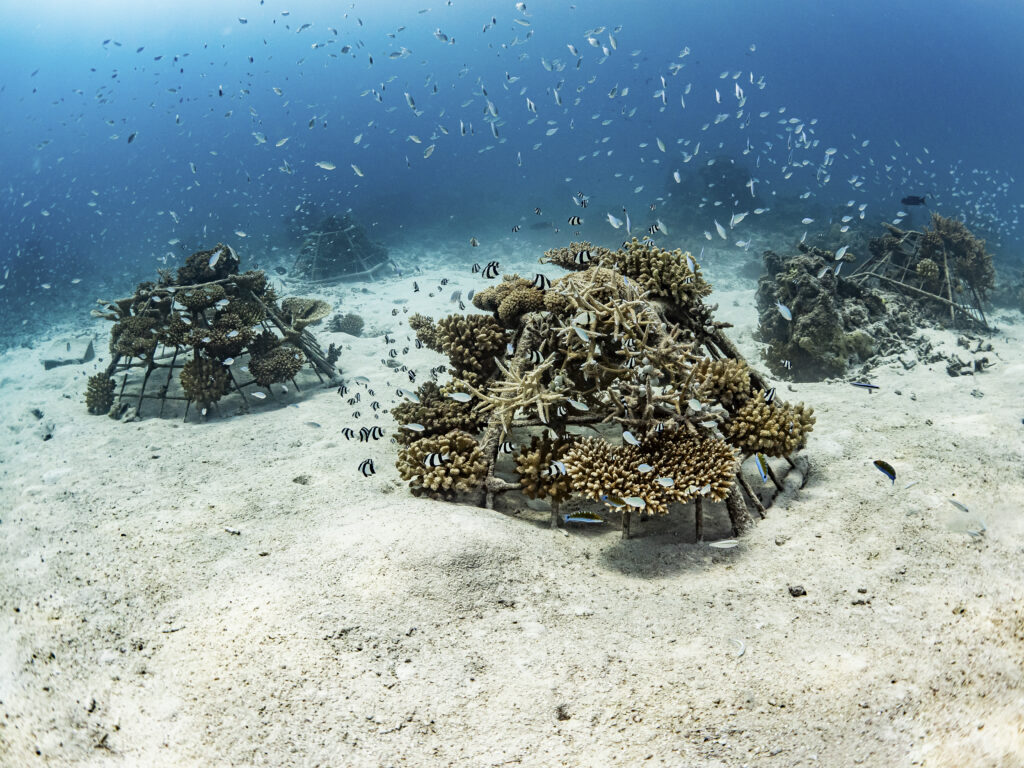
Seeing outplanted corals and artificial reef structures establish and become part of the reef, surrounded by returning marine life, highlights the progress of restoration efforts over time. (Pictures in part by Daniel Bichsel)