Batanta: Measuring reef recovery beyond the nursery

When we restore coral reefs, our goal isn’t merely to grow corals in nurseries and be done with it – it’s to rebuild living reef ecosystems.

This year, our long-term monitoring in Batanta, Raja Ampat, revealed one of the clearest signs yet that our restoration efforts are making a measurable difference to these reef systems – beyond the isolated success of a nursery.

Over just ten months, hard coral cover at our restoration site increased from 6.3% in 2025 to 18.3% in 2026, a remarkable shift from a degraded reef towards a healthier, living coral community. Even more encouraging, our surveys show that 42% of this increase can be directly attributed to our ongoing active coral restoration efforts!


Restoring a reef together

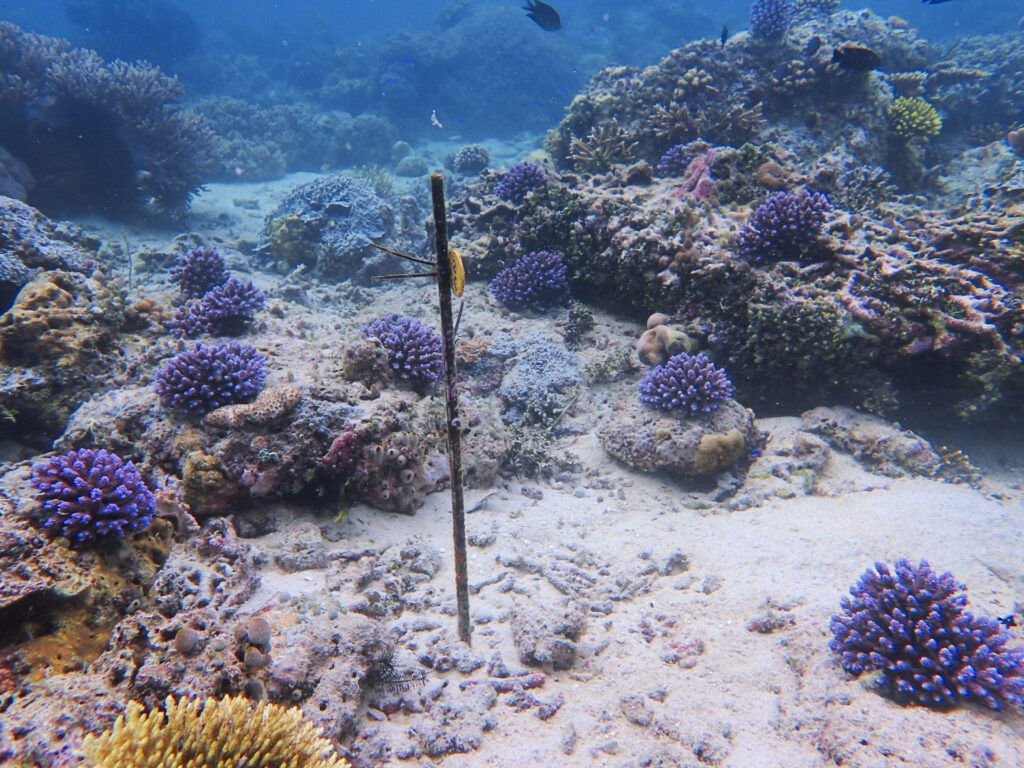
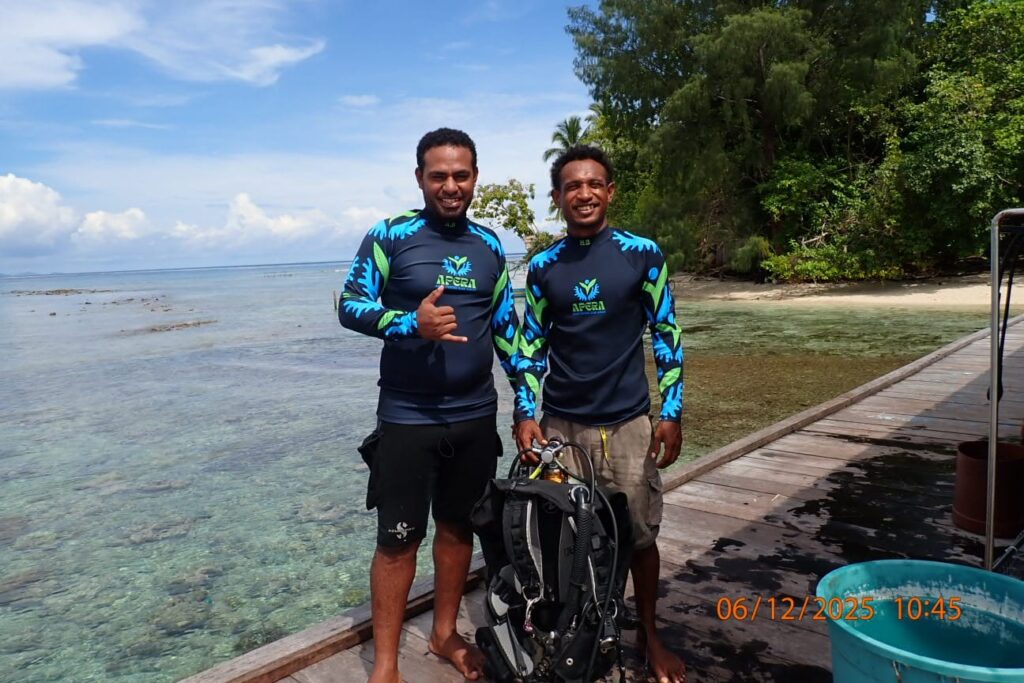
Coralive has been working with Dayan Homestay and its owner, Konstantinus Saleo, on Pulau Dayan since 2024. Despite Raja Ampat’s exceptional marine biodiversity, reefs around Batanta have been affected by rising sea temperatures, severe weather events, and the ugly legacy of destructive fishing practices such as dynamite fishing.

These pressures have left parts of the reef degraded, affecting marine life as well as local livelihoods that depend on healthy reefs for tourism, fisheries, and coastal protection.

Our project combines a multifaceted coral restoration approach with long-term ecological monitoring and local capacity building to help these reefs recover.

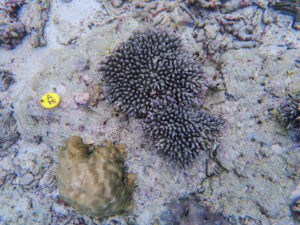
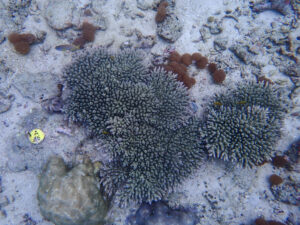
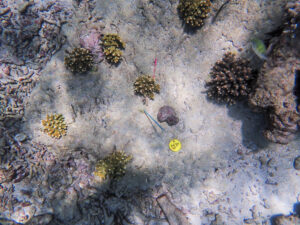
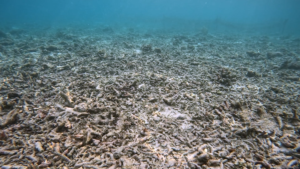
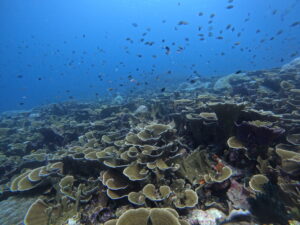
A degraded reef section
vs a healthy reef in Indonesia

Growing thousands of corals

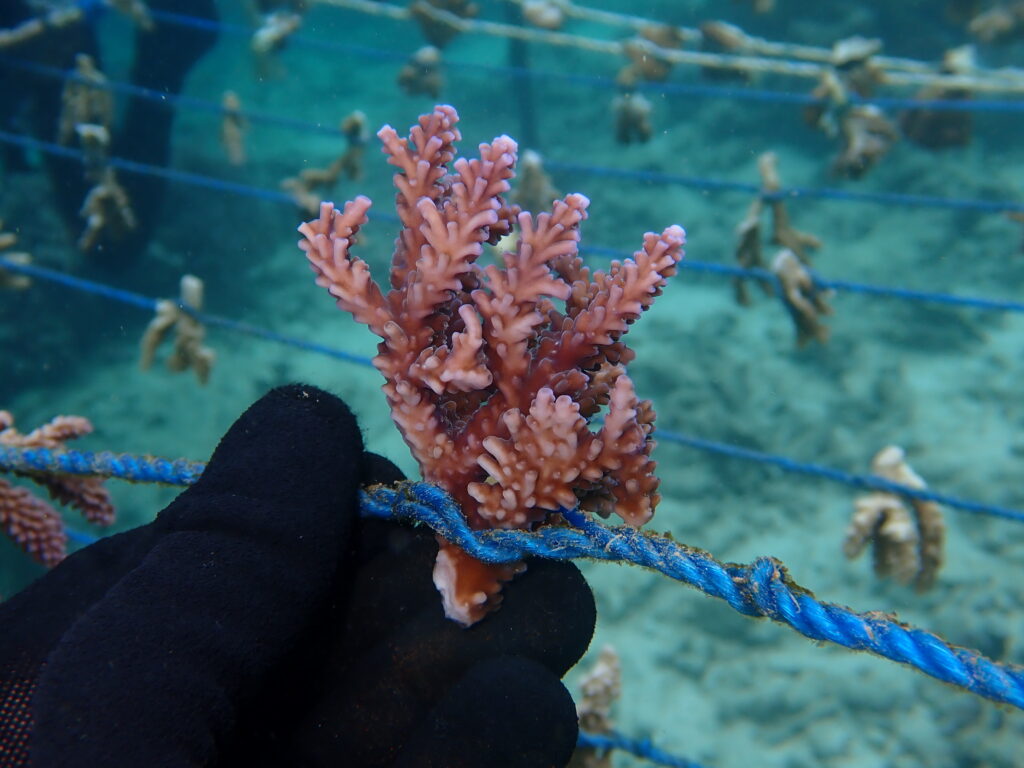
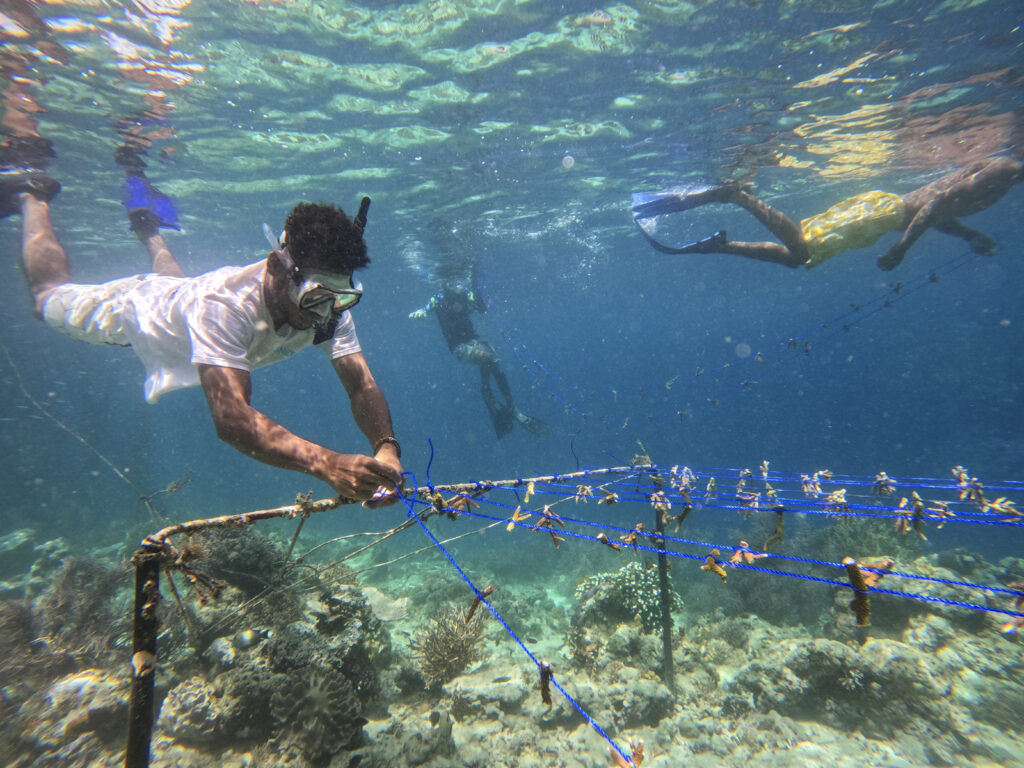
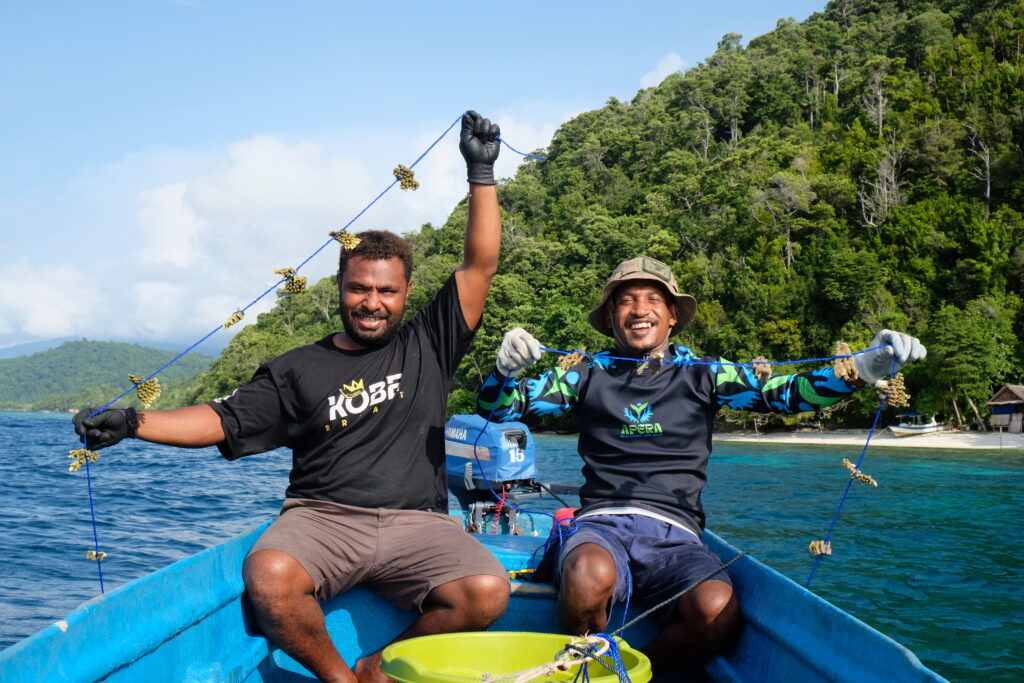
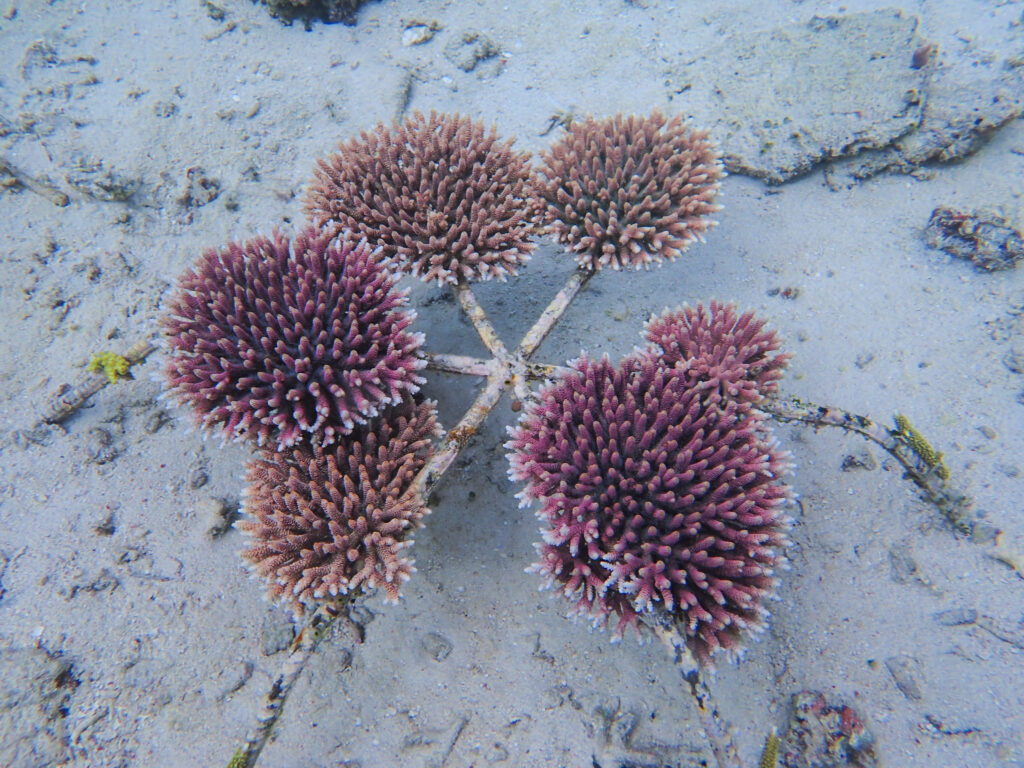
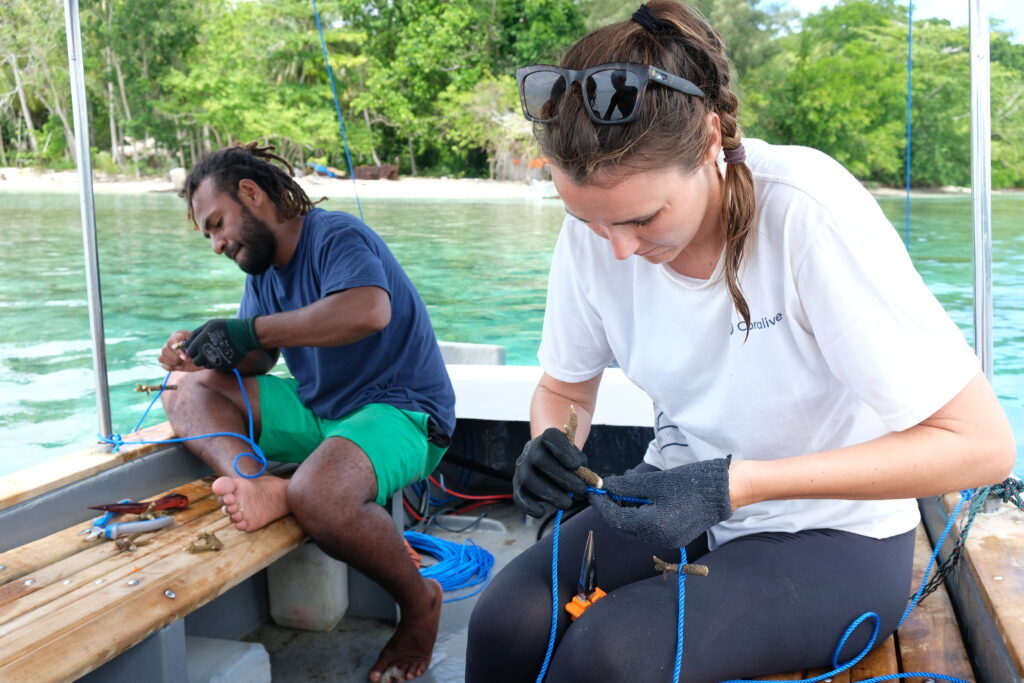
Rope coral nurseries form the basis of the project. Small coral fragments are attached to suspended ropes, where good water flow and reduced sediment exposure provide suitable conditions for growth. After roughly one year, colonies large enough for outplanting are returned to the reef. During the latest nursery cycle, our three rope nurseries at Dayan Homestay reared 1,876 coral fragments, achieving an impressive 96% survival rate. By the end of the cycle, 1,598 healthy colonies had grown large enough to be transplanted back onto the reef, while others were retained as donor stock or left to continue growing.

At the same time, we expanded the project by establishing a new nursery at Batanta Paradise Homestay and repopulated all four nurseries with a total of 2,203 new coral fragments, to continue the reef recovery trajectory we are on.

These are basic techniques, but they are working tremendously. Low budgets, few personnel, and simple methods – yet an impressive local impact.

Since the project began, Coralive, in partnership with Dayan Homestay, has now:

  • Reared 6,378 coral colonies in nurseries
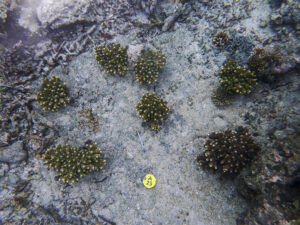
  • Outplanted 3,272 nursery-grown corals onto degraded reef habitat and another 1,056 onto artificial structures
  • Trained five local coral stewards, expanding local restoration capacity

Selecting corals for the future

Besides growing and outplanting corals, it is also important to decide which corals should become the next generation of donor colonies.

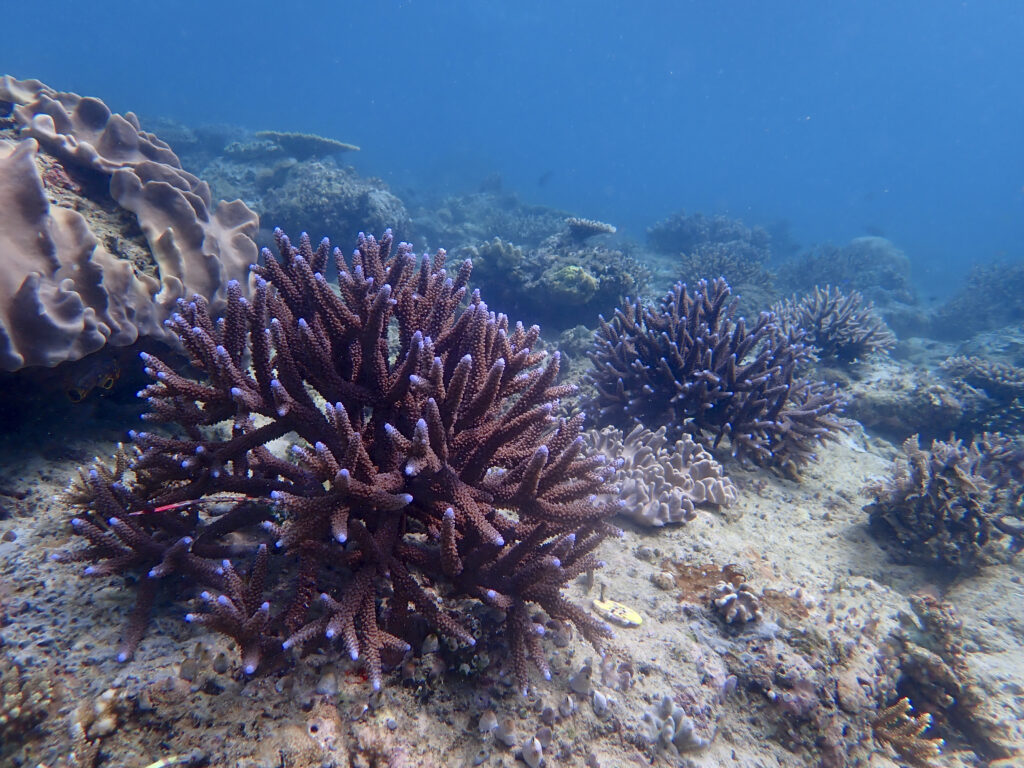
Each year, the nurseries are reviewed and adjusted based on what we learn through monitoring. For the 2026-27 nursery cycle, Pocillopora spp. and Acropora parilis were removed from the nursery, while Acropora yongei and Acropora abrolhosensis were expanded to better represent these species. Acropora divaricata was also reintroduced, increasing the diversity of species being propagated.

When selecting donor colonies, we also look for individuals that show characteristics associated with resilience. Preference is given to large, healthy colonies that maintain strong pigmentation, and appear to tolerate challenging shallow-water conditions. Propagating fragments from these robust individuals may increase the representation of naturally resilient genotypes within the restoration site.

Also, rather than collecting entirely new donor colonies each year, some of the strongest nursery-grown colonies are retained to become donor stock for the following nursery cycle. This allows successful genotypes to be propagated while also introducing new genetic material from nearby healthy reefs to maintain genetic diversity.

Restoration doesn’t end at outplanting

For many restoration projects, planting corals marks the finish line, but not for us.

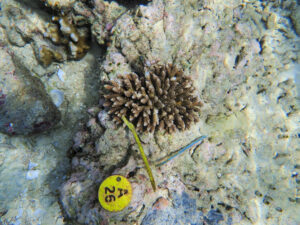
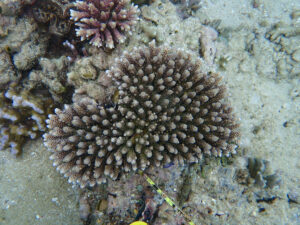
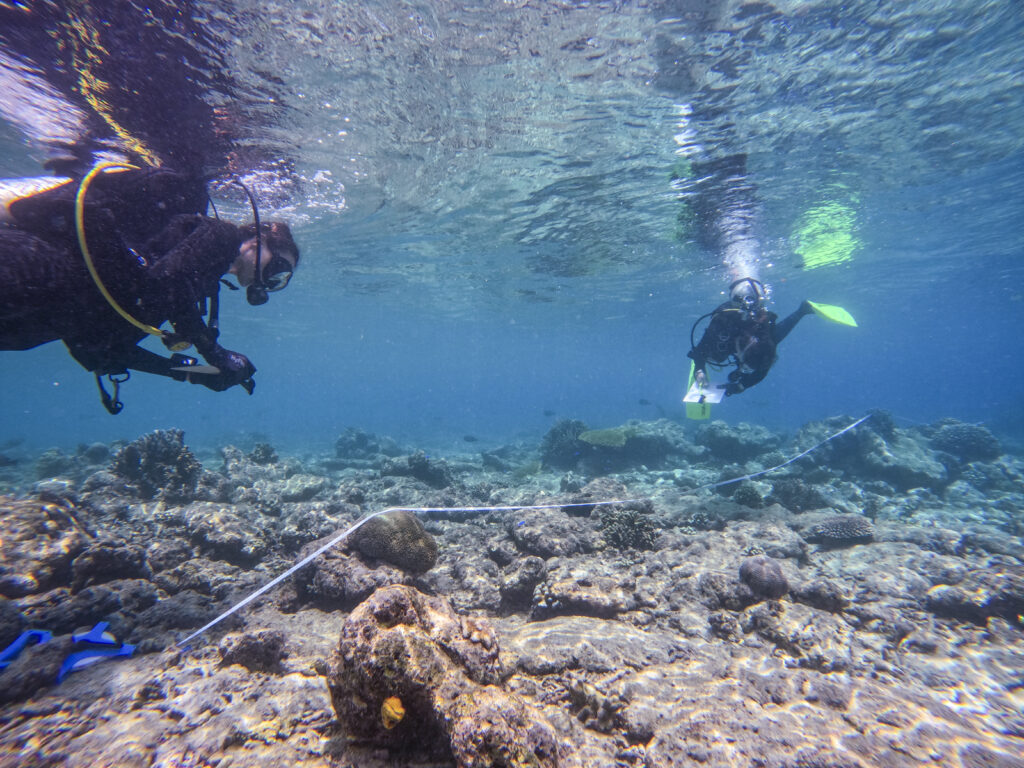
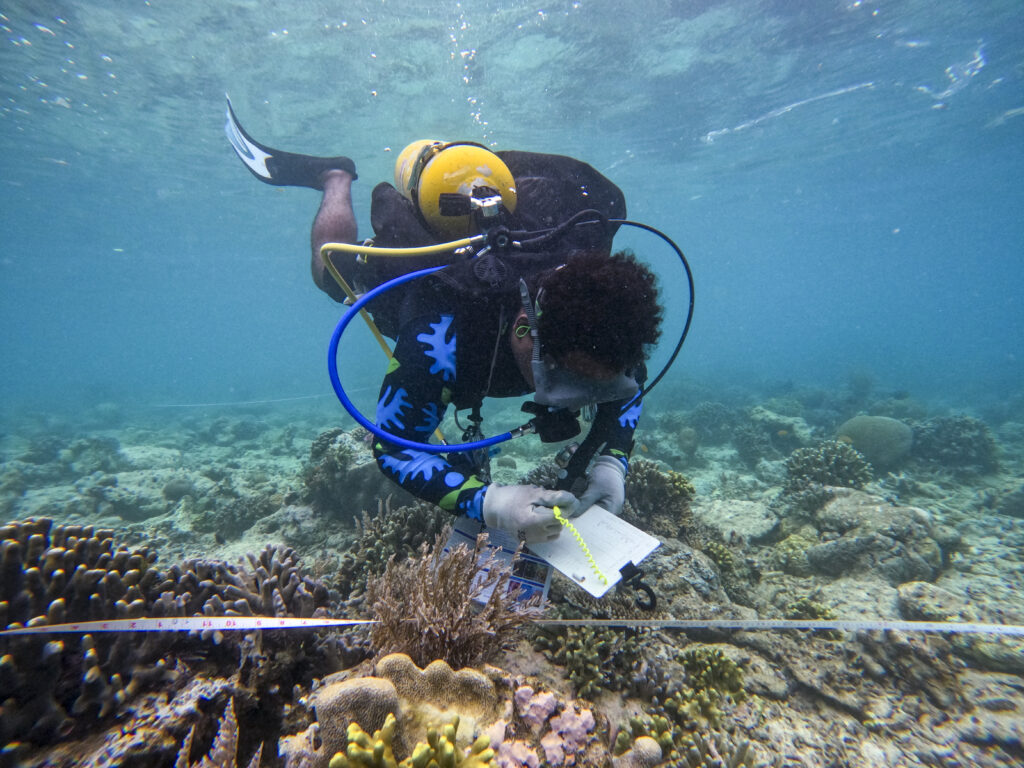
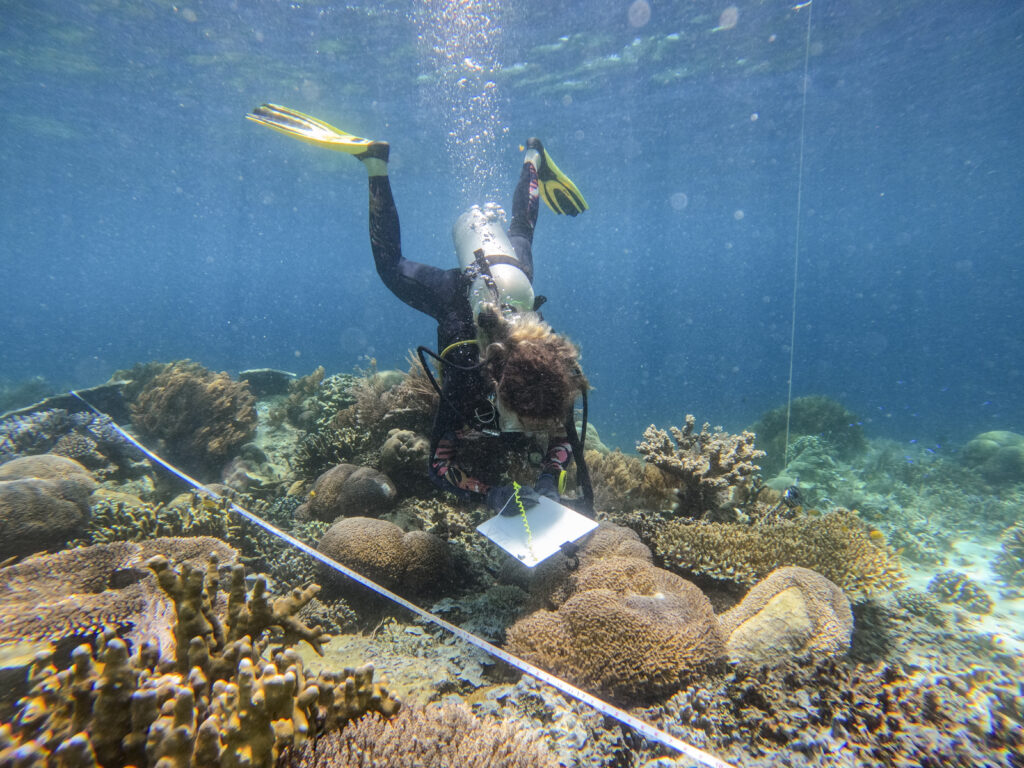
Every outplanted coral cluster is mapped, and a representative subset is tagged and revisited over time. Individual colonies are photographed, measured and assessed for survival, health, and growth. This allows us to understand not only whether the corals survive, but how they contribute to rebuilding the reef itself.

Outplants from the previous restoration cycle showed an overall survival of 76% after one year on the natural reef, demonstrating that the majority of nursery-grown colonies successfully established after outplanting. These surviving colonies have already grown substantially, with neighbouring colonies beginning to fuse into larger, potentially reproductive colonies, actively contributing to the natural reef frame.

Monitoring helps us improve future restoration by identifying which species, locations, and restoration methods perform best under local conditions, but it also highlights where our work needs to adapt. For example, benthic surveys can reveal rubble fields or unstable substrate that may require additional rubble stabilization before corals can successfully establish, thereby guiding our next steps.
A reef beginning to recover

To assess whether restoration is changing the ecosystem, we carry out annual benthic surveys, measuring how much of the reef floor is covered by hard corals, algae, rubble, sand, and other organisms.

This year’s results show a substantial change: Hard coral cover increased from 6.3% to 18.3% within just ten months!

By distinguishing naturally occurring from nursery-reared corals during these surveys, we found that 42% of this increase came directly from our outplanted nursery corals. Colonies from the 2024 restoration cycle alone now account for 5% of the total benthic cover at the restoration site.

It is important to note that these figures capture only the direct contribution of transplanted corals. Other restoration activities – including predator removal, coral triage, and the removal of competing algae, sponges, and invasive soft corals – also support coral survival and natural recruitment, but their individual contribution cannot be isolated in the benthic surveys.

Together, these results show that scientifically informed coral restoration can produce measurable ecosystem-level changes over relatively short timeframes.

Looking beyond the numbers

Growing corals in nurseries is an important first step, but healthy reefs are measured by what happens after those corals return to the natural reef.

By combining coral gardening with long-term ecological monitoring, we’re able to evaluate the real impact of our work and not just how many corals we grow, but how those corals help restore living reef habitat.

The encouraging results from Batanta show that active coral restoration, when paired with consistent monitoring and adaptive management, can accelerate reef recovery and provide measurable improvements to the health of degraded coral ecosystems.


Want to see the project in action?

Take a closer look at our restoration work in Batanta and meet some of the people behind the project in our video from Raja Ampat.